Women Pant Size
If you’ve ever ordered the “same size” pants from two different stores and ended up with two completely different fits, you’re not imagining things. A size 8 at one store can feel like a size 4 somewhere else, or a size 12 at another. Add in confusing terms like rise, inseam, and waist that nobody really explains, and it’s no wonder so many people just give up and buy three sizes to try on at home.
This guide walks through what actually goes into women pant size standards, how to take your own measurements without guessing, and how to shop smarter no matter what cut, brand, or category you’re after — tall, plus, wide-leg, you name it.
Why Women Pant Size Feels So Random?
Men’s trousers usually come labeled with exact numbers, like 32×34, so there’s not much room for confusion. Women’s clothing didn’t get that memo. Instead, most brands stick to a numbered system — 0, 2, 4, 6, and so on — that shifts depending on who’s making the pants. Retailers sometimes adjust their numbering on purpose (people in the industry call this vanity sizing), which is part of why there’s no single agreed-upon standard across the board.
That’s exactly why figuring out female pant sizes means looking past whatever number is printed on the tag. Your actual body measurements will tell you a lot more than the label ever will, and keeping a decent women’s pant size chart nearby makes the whole process far less frustrating.
The Measurements That Actually Matter
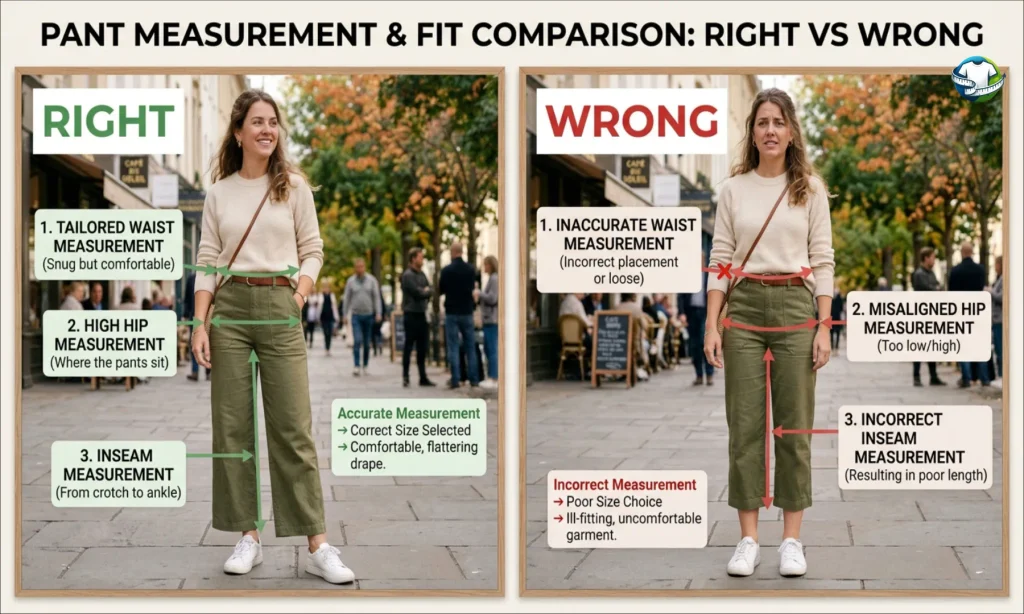
Before any women’s pants size guide is going to do you much good, you need three numbers.
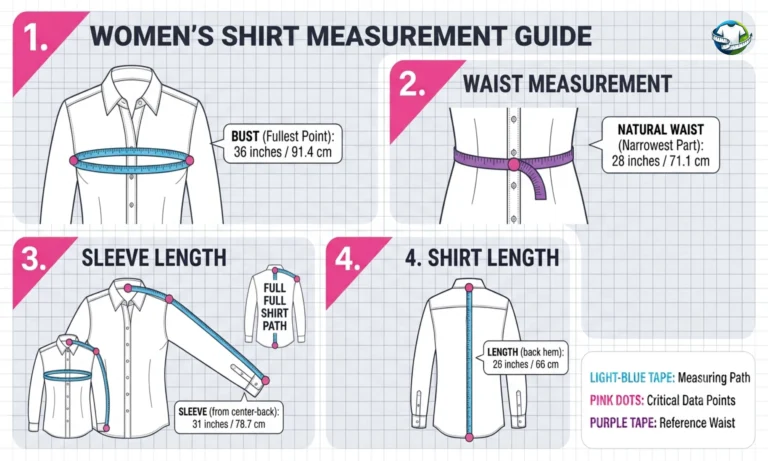
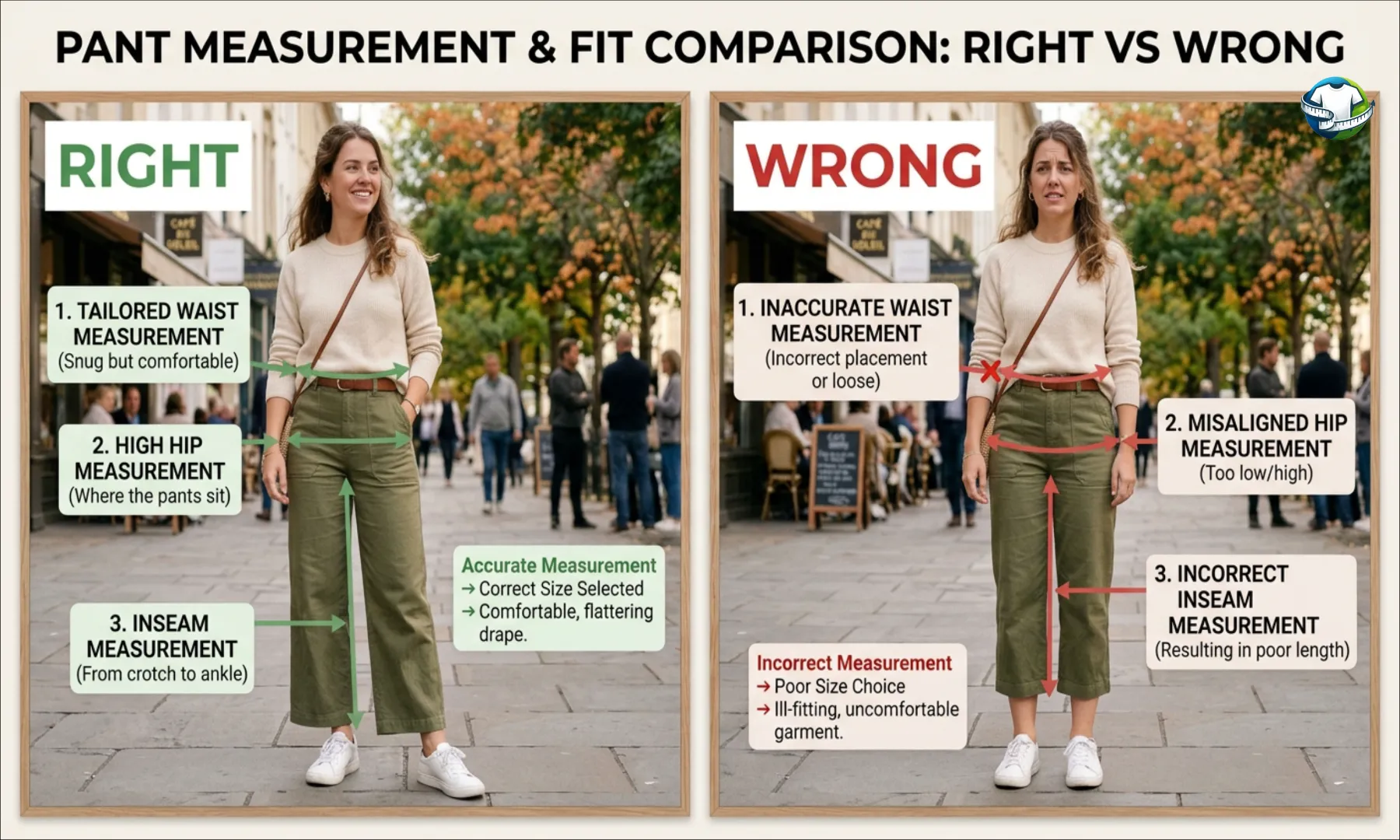
Waist. Wrap the tape around the narrowest part of your torso — usually just above the belly button. Snug is fine, but don’t cinch it. This is the backbone of any women’s waist size chart, and it’s the number that determines how a pant sits once you put it on.
Hips. Measure around the fullest part, roughly 7 to 9 inches below your waist. People tend to focus on waist size and forget this one, but for fitted styles it matters just as much, sometimes more.
Rise and inseam. Inseam is simply the length from the crotch seam down to the hem. Rise measurement pants terminology gets a little trickier — it’s the distance from the crotch seam up to the top of the waistband, and it comes in three flavors:
Low rise, which sits below your natural waistline
Mid rise, at or just below it
High rise, at or above it
Here’s the thing people miss: two pairs of pants can have the exact same waist number and still fit completely differently once you factor in where the rise lands.
A General Women’s Pant Size Chart
Below is a rough U.S.-based reference. Treat it as a starting point rather than gospel — brands routinely swing an inch or two in either direction.
| Alpha Size | US Size | UK Size | EU Size | Waist (Inches) | Waist (cm) | Hips (Inches) | Hips (cm) |
| XXS | 00 – 0 | 2 – 4 | 30 – 32 | 23″ – 24″ | 58–61 cm | 33″ – 34″ | 84–86 cm |
| XS | 2 | 6 | 34 | 25″ – 26″ | 63–66 cm | 35″ – 36″ | 89–91 cm |
| S | 4 – 6 | 8 – 10 | 36 – 38 | 27″ – 28″ | 68–71 cm | 37″ – 38″ | 94–96 cm |
| M | 8 – 10 | 12 – 14 | 40 – 42 | 29″ – 30.5″ | 73–77 cm | 39″ – 40.5″ | 99–103 cm |
| L | 12 – 14 | 16 – 18 | 44 – 46 | 32″ – 33.5″ | 81–85 cm | 42″ – 43.5″ | 106–110 cm |
| XL | 16 – 18 | 20 – 22 | 48 – 50 | 35″ – 37″ | 89–94 cm | 45″ – 47″ | 114–119 cm |
| XXL | 20 – 22 | 24 – 26 | 52 – 54 | 39″ – 41″ | 99–104 cm | 49″ – 51″ | 124–129 cm |
A women’s trouser size chart like this one is a decent jumping-off point, but always double-check against the brand’s own numbers when you can find them. A women’s jeans size chart in particular tends to run differently from what you’d see for dress trousers, so don’t assume one applies to the other.
Jeans Play By Their Own Rules
Denim has always been a bit of an outlier. Some brands number their jeans by actual waist inches — 24, 25, 26 — while others just default to the usual dress-size scale of 0, 2, 4. Stretch content changes everything too. A pair with a bit of spandex or elastane woven in will forgive a lot more than a rigid 100% cotton denim will. So when you’re checking a women’s jeans size chart, look for whether they list the stretch percentage. It can nudge your ideal size up or down more than you’d think.
Tall Sizes: Solving the Length Problem
Most standard pants are drafted for someone between about 5’4″ and 5’7″. If you’re taller, you already know the drill — regular-length pants end up hovering above the ankle no matter what size you buy. That’s the whole reason tall size women’s jeans exist. They keep the waist and hip proportions the same as standard sizing but stretch the inseam out, often to 34-37 inches instead of the usual 30-32. Most major retailers carry a dedicated tall section now, so it’s worth a quick check before assuming your size just isn’t available.
Plus Size Pants: Comfort Without Compromise
Plus size pants for women generally start somewhere around a 14 or 16, though where exactly that starts varies from one label to the next. A genuinely well-made pair of plus size jeans for women isn’t just a straight-size pattern scaled up — it accounts for differences in waist-to-hip ratio, deeper rise, and more room through the thigh.
For office and formal wear, women’s plus size trouser pants tend to lean on structured waistbands and fabric blends built to resist wrinkling through a long day. Shoppers hunting for pants for plus size ladies usually keep an eye out for a few specific things:
Wider waistbands, sometimes with hidden elastic panels for give
Curved yokes that actually follow the body instead of fighting it
Reinforced stitching at the seams that take the most stress
A touch of stretch — 2 to 4% is usually enough to make a difference
And when it’s time to dress up for work, ladies plus size dress pants typically come in straight-leg, bootcut, or wide-leg cuts, each one handling proportion a little differently depending on what you’re going for.
Wide-Leg Pants and Other Relaxed Silhouettes
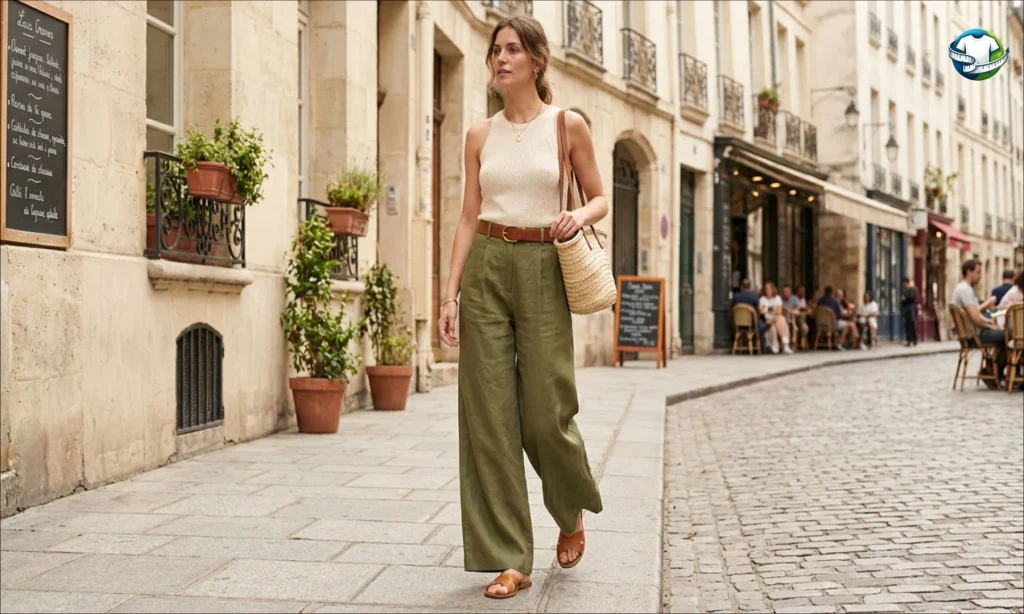
Not everything needs to hug the body. Womens wide pants have quietly become a wardrobe staple, both for casual days and for the office, with a loose drape that starts at the hip and carries all the way down. People gravitate toward this cut for a handful of reasons:
More airflow, which matters more than you’d think in warm weather
A nice contrast against fitted or cropped tops
A flattering fit across a wide range of body shapes
Usually paired with a higher rise, which helps balance the silhouette
Sizing for wide-leg trousers still comes down to waist and hip measurements like everything else, though it’s worth glancing at the hem width too if you have opinions about how much fabric pools around your ankle.
A Few Honest Tips for Shopping Online
Measure yourself before you shop, rather than trusting whatever size you think you “always” wear. Sizing drifts between brands, and honestly, sometimes between two collections from the same brand in the same year.
Check the actual size chart for the item you’re buying, not a general one you found somewhere else. Dress pants, jeans, and athletic wear from the same store can all use different measurement logic.
Pay attention to what the fabric is made of. Stretch fabric forgives a lot; rigid fabric won’t.
Rise and inseam deserve as much attention as waist size, especially if your torso runs long or short, or if you fall outside the “average” height range.
And don’t skip the reviews. Real shoppers are usually pretty upfront about whether something runs small, runs large, or actually fits true to size.
FAQ’s
Conclusion
None of this sizing stuff has to be a mystery once you know your own measurements and understand how brands translate them differently. Whether you’re chasing down the right denim, a sharp pair of trousers for the office, or something loose and comfortable in a wide-leg cut, a good size chart paired with your actual numbers will save you a lot of returns — and a lot of frustration.