Pant Size Chart
Finding the perfect pants size is quite difficult if you don’t know the pant size chart. Brands have different sizes, and you need to know the sizes. If you have ever bought pants from a brand that looks like a perfect fit for you, but when you bring them home and wear them, they’re either too short or too long. On the other hand, you tried it once in the try room. It looked perfect at that time, but after that, it was not the perfect size. To overcome this issue, you need to know the sizes. A pants size chart helps you to choose the perfect fit for you.
This guide will teach you exactly how to find your pant size in inches, how to interpret a pant size measurement chart, and what to look for when you shop for standard and plus-size pants. You will learn to read any clothing label because you need to choose the perfect match for your requirements.
| Alpha Size | USA Size | UK Size | EU Size | Waist (Inches) | Waist (CM) | Standard Length |
| XS | 28 | 28 | 44 | 28–29″ | 71–74 | 30″ |
| S | 30 | 30 | 46 | 30–31″ | 76-79 | 30–32″ |
| M | 32 | 32 | 48 | 32–33″ | 81–84 | 32″ |
| L | 34 | 34 | 50 | 34–35″ | 86–89 | 32–34″ |
| XL | 36 | 36 | 52 | 36–37″ | 91–94 | 34″ |
| XXL | 38 | 38 | 54 | 38–39″ | 97–99 | 34–36″ |
| 3XL | 40 | 40 | 56 | 40–41″ | 102–104 | 34–36″ |
| 4XL | 42 | 42 | 58 | 42–43″ | 107–109 | 36″ |
| 5XL | 44 | 44 | 60 | 44–45″ | 112–114 | 36″ |
Decoding the Standard US Pant Size Chart
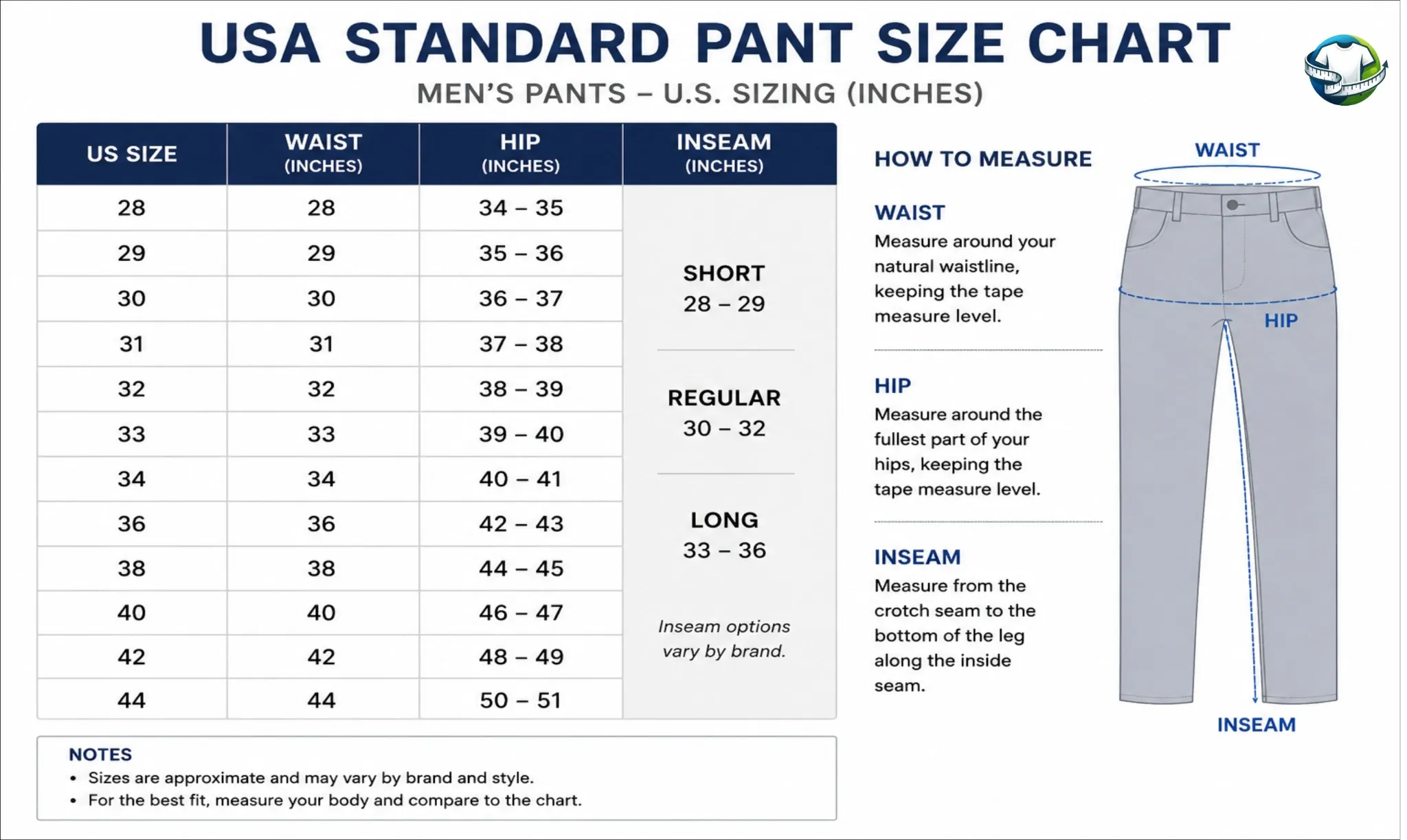
Men’s trousers display two numeric values, which are joined by an “x” (for example, 34×32) between them. The US pant size chart uses these numbers as its basic measurement system.
The first number indicates waist size, while the second number indicates inseam length. Both numbers are measured in inches. A 34×32 size label indicates that the pants have a 34-inch waist and a 32-inch inseam. The actual garment measurements will differ from the standard measurements because each brand follows its own sizing system.
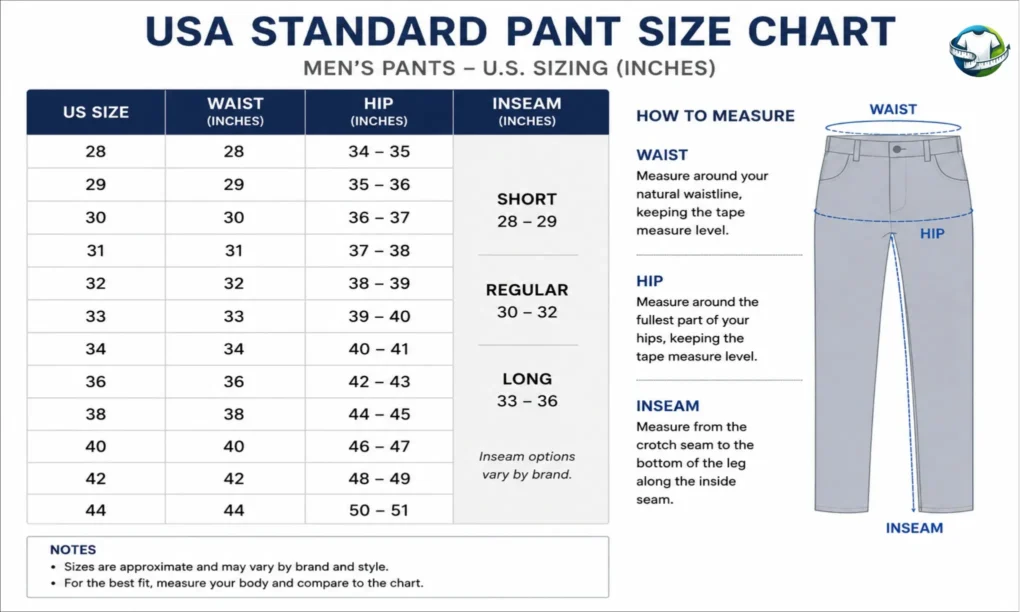
Men’s pants size chart tells you the measurements of all sizes, which include Small (28 to 30 inches), Medium (32 to 34 inches), Large (36 to 38 inches), Extra Large (40 to 42 inches), and XXL (44 to 46 inches. These sizes run in even numbers, which are mostly 32, 34, 36, etc. You can keep a pants size chart in your phone, which will help you choose sizes easily.
Men’s pants size chart has standard sizes which are as follows: Small (S) 28 to 30-inch waist, Medium (M) 32 to 34-inch waist, Large (L) 36 to 38-inch waist, Extra Large (XL) 40 to 42-inch waist, XXL 44 to 46-inch waist. Inseams are in even numbers, like 28 to 30 inches are Small, 32 to 34 inches
How to Measure Your Pant Size in Inches?
You cannot rely on a male pants size chart if you do not know your actual body measurements. Relying on the size of your current favorite pants can mislead you due to a retail practice known as “vanity sizing.” Brands often label a pair of pants with a 36-inch waist as a size 34 to make customers feel better.
To get accurate numbers, you need a flexible soft measuring tape. Here is how to capture your true measurements:
Step 1: Measure Your Waist
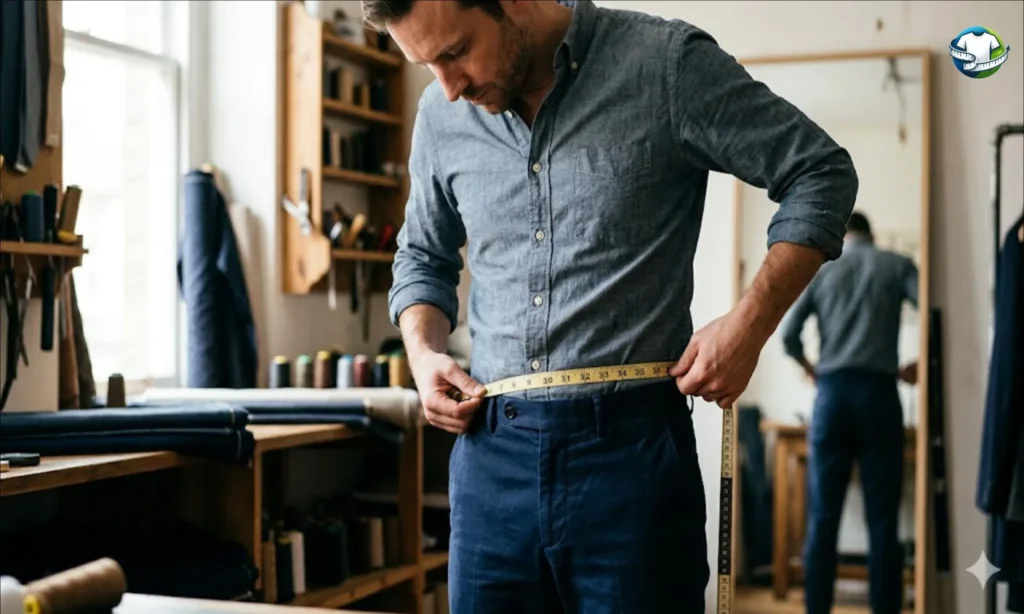
You need to perform a waist measurement without any clothing on your body. You need to maintain correct posture when you need to measure your waist. The measuring tape should be placed around your waist at its most natural point. Your natural waistline should be located at a position that is lower than your belly button. The tape should be fastened at a tightness level that prevents it from becoming excessive. The tape should be tight enough to create contact with your skin, while you can maintain a distance of one finger between your body and the tape. Record the waist measurement result that you obtain through your measurement process.
Step 2: Measure Your Inseam
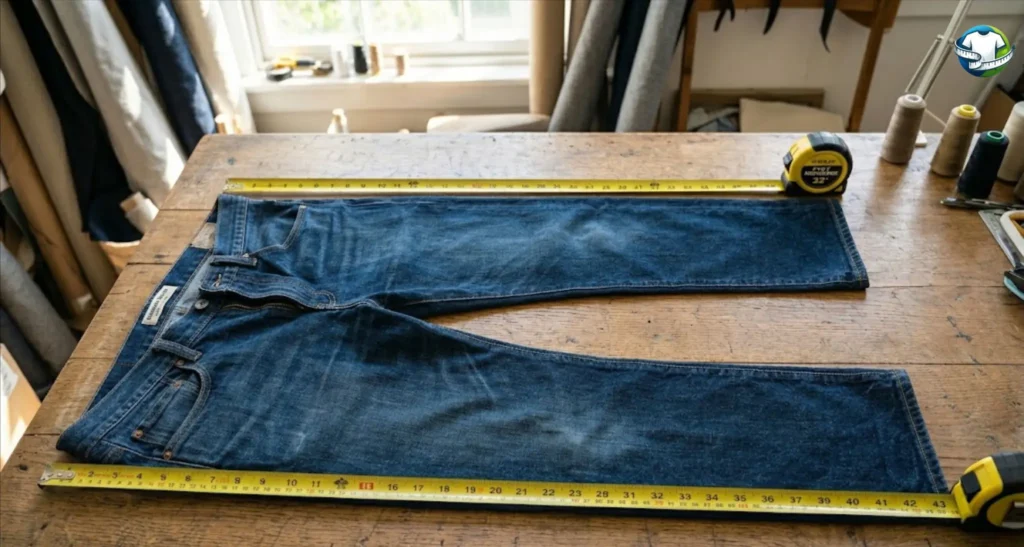
Your inseam is what decides how long your pants are. It is the distance from the top of your thigh to your ankle. The easiest way to measure your inseam is to use a pair of pants that fit you well. Lay the pants on the floor. Measure from the crotch down to the bottom of the leg.
Step 3: Measure Your Hips and Thighs
When buying pants, knowing your hip and thigh sizes is important. You need to measure your size by wrapping a tape around your hips, and for thighs, you should measure from a bit above your thighs because the upper thighs have more size than the lower. This method will help you get a perfect fit when you’re buying pants.
Navigating the Jeans Size Chart
Denim shopping creates exceptional challenges through its implementation of distinct shopping methods. Your jeans size might differ slightly from your dress pant size due to the thickness and stretch of the denim fabric. People should observe the material composition when they check a jeans size chart. Raw, 100% cotton denim will feel very stiff and tight at first. The material requires several weeks of use for its break-in period because it needs to adapt to body shape. You should check your specific brand’s men’s size chart to determine your correct sizing after buying raw denim. The use of elastane and spandex has become common in contemporary jeans. The stretch fabrics permit users to make minor errors with their measurements while delivering instant comfort. Your actual pant size in inches will determine your stretch denim size when you purchase that type of denim.
The Rise Factor
The “rise” measurement starts at the crotch seam midpoint and extends to the waistband top edge. Your denim experience will change because of this element, which affects both your jean fit and comfort level. High Rise: Sits above the hips, closer to the belly button. The natural waist area serves as the main resting point for this style, which people wear most frequently. Low Rise: Sits low on the hips. You should select one size larger when you want to wear low-rise jeans because your hips will measure wider than your natural waist. The Right Fit: Plus Size Jeans and Pants Finding The Right Fit
Plus-size pants have become more accessible because fashion designers now create various stylish options for this body type. The standard pant size measurement chart fails to provide accurate waist-to-inseam ratio scaling for larger men.
The best option for plus-size jeans shopping is to select brands that provide “Big & Tall” dedicated sizing. The “Big” sizing category allows for wider waist measurement, which is combined with regular or shorter pants length. The “Tall” sizing category provides extended pants length while maintaining standard waist measurements. The most important factor for your comfort needs to be maintained. The ideal pants should have hidden elastic waistbands that use stretch panels for flexibility. The design elements create a customized fit that retains an elegant, tailored look. The combination of pleated trousers and flat-front pants provides extra space in the hip and thigh regions, which makes pleated trousers more comfortable for larger body types.
International Size Conversions
If you shop online from international retailers, a US size chart will not help you much. European and UK sizing standards differ significantly.
UK Sizing: UK sizes generally mirror US sizing. A 34 waist in the US is typically a 34 waist in the UK.
European (EU) Sizing: EU sizing uses metric measurements. To convert your US waist size to an EU size, you generally add 16. For example, a US size 34 waist becomes an EU size 50.
Italian Sizing: Similar to standard EU sizing, but cuts tend to be much slimmer. You may need to size up if you have athletic thighs or calves.
Always check the specific retailer’s international men’s pants size chart before finalizing your purchase, as conversions can vary slightly across different design houses.
Common Pant Fits and Silhouettes
Knowing your numbers is only half the battle. You also need to understand how the garment is cut. The same measurements applied to different fits will yield entirely different results.
Skinny Fit
Skinny pants taper tightly from the hip all the way down to the ankle. They offer very little extra fabric. If you have thicker legs, you might need to size up or avoid this cut entirely.
Slim Fit
Slim fit pants follow the natural contour of your legs but leave a bit of breathing room. They are narrower through the thigh and calf than a straight fit, but not skin-tight like skinny jeans. This is a highly versatile modern cut.
Straight Fit
The straight fit is a classic. The leg falls straight down from the knee to the hem without tapering. This provides a comfortable amount of room throughout the leg and works well with almost any body type.
Relaxed Fit
Relaxed pants offer extra room in the seat, thigh, and leg. They are ideal for men with athletic builds or those who prioritize mobility and comfort.
Pro Tips for Buying Pants Like an Expert
Cotton and wool pants experience shrinkage when they go through washing processes. The 100% cotton pants you purchase will become tighter after washing, according to their store fit. You should select pants that have longer inseams because you intend to wash them using a washing machine.
Find a Good Tailor: When you purchase pants from stores that sell ready-made clothing, it becomes difficult to find a pair that fits your body well. Buy pants that fit your waist and hips well. Your body needs proper-fitting pants that you should take to a tailor who will adjust the length and reduce the pants’ width. The costs of tailoring services need not exceed a person’s financial capacity. The result produces significant changes.
Read Brand Reviews: When customers review pants, they often say if the pants are the size as usual or if they are bigger or smaller. Use this information along with the size chart from the brand to help you decide.
Ignore the Label, Trust the Fit: Don’t worry much about the size on the label. Different brands have sizes, so you might be one size in one store and a different size in another. Just focus on how the pants feel and look on you.
Conclusion
Knowing your body measurements is the first step to mastering your wardrobe. It takes a few minutes to measure yourself with a tape. This way you can leave your house feeling confident. Avoid returning clothes that don’t fit. You can get a fit by using a reliable size chart for men. Also know how different fabrics and garment styles affect the fit. Be aware of how small changes made by local tailors can impact the fit. With this knowledge you can buy any trousers, chinos or jeans. Be sure they will meet your expectations. You will know they will fit well whether you buy trousers, chinos or jeans. This makes buying clothes much easier.