Women Shirt Size
We’ve all been there. You order a shirt online, it looks perfect in the photos, and then it shows up and the fit is just… off. Too tight through the shoulders, too long in the body, or somehow both baggy and small at the same time. Part of the problem is that women’s shirt size labels aren’t standardized across brands. A medium at one store can be a small somewhere else, and honestly, that inconsistency is why so many of us end up with a drawer full of “almost right” shirts we never wear.
So let’s get into what actually helps.
| Alpha Size | USA Size | UK Size | EU Size | Bust (in / cm) | Sleeve Length (in / cm) | Shirt Length (in / cm) |
| XS | 0 – 2 | 4 – 6 | 32 – 34 | 31″–32.5″ (78–82 cm) | 29.5″–30″ (75–76 cm) | 24″–24.5″ (61–62 cm) |
| S | 4 – 6 | 8 – 10 | 36 – 38 | 33″–35″ (83–89 cm) | 30″–30.5″ (76–77 cm) | 25″–25.5″ (63–65 cm) |
| M | 8 – 10 | 12 – 14 | 40 – 42 | 35.5″–37.5″ (90–95 cm) | 30.5″–31″ (77–79 cm) | 26″–26.5″ (66–67 cm) |
| L | 12 – 14 | 16 – 18 | 44 – 46 | 38″–40.5″ (96–103 cm) | 31″–31.5″ (79–80 cm) | 27″–27.5″ (68–70 cm) |
| XL | 16 – 18 | 20 – 22 | 48 – 50 | 41″–43.5″ (104–110 cm) | 31.5″–32″ (80–81 cm) | 28″–28.5″ (71–72 cm) |
| XXL | 20 – 22 | 24 – 26 | 52 – 54 | 44″–46.5″ (111–118 cm) | 32″–32.5″ (81–83 cm) | 29″–29.5″ (73–75 cm) |
| 3XL | 24 – 26 | 28 – 30 | 56 – 58 | 47″–49.5″ (119–126 cm) | 32.5″–33″ (83–84 cm) | 30″–30.5″ (76–77 cm) |
| 4XL | 28 – 30 | 32 – 34 | 60 – 62 | 50″–52.5″ (127–133 cm) | 33″–33.5″ (84–85 cm) | 31″–31.5″ (78–80 cm) |
| 5XL | 32 – 34 | 36 – 38 | 64 – 66 | 53″–56″ (134–142 cm) | 33.5″–34″ (85–86 cm) | 32″–32.5″ (81–83 cm) |
Why sizing is all over the place?
There isn’t one governing body deciding what a size 8 or a medium should measure. Every brand sets its own standard, which means a shirt size chart for women from one company won’t necessarily match another. Add fabric into the mix and it gets even messier – a cotton tee, a stretchy blend, and a stiff denim shirt can all wear a “large” label and fit completely differently on the same person.
Cut plays a huge role too. Boxy tees, tailored blouses, structured button-downs – they’re built on different patterns even when they share a size tag. This is especially true if you’re after an oversized tshirt for women, since a deliberately roomy cut is going to measure very differently from a fitted tee in the same labeled size. If you’ve got a womens t shirt size chart handy from the specific brand you’re buying from, use that one over any general chart you find online. It’ll be more accurate to what you’re actually about to order.
Taking Your Own Measurements
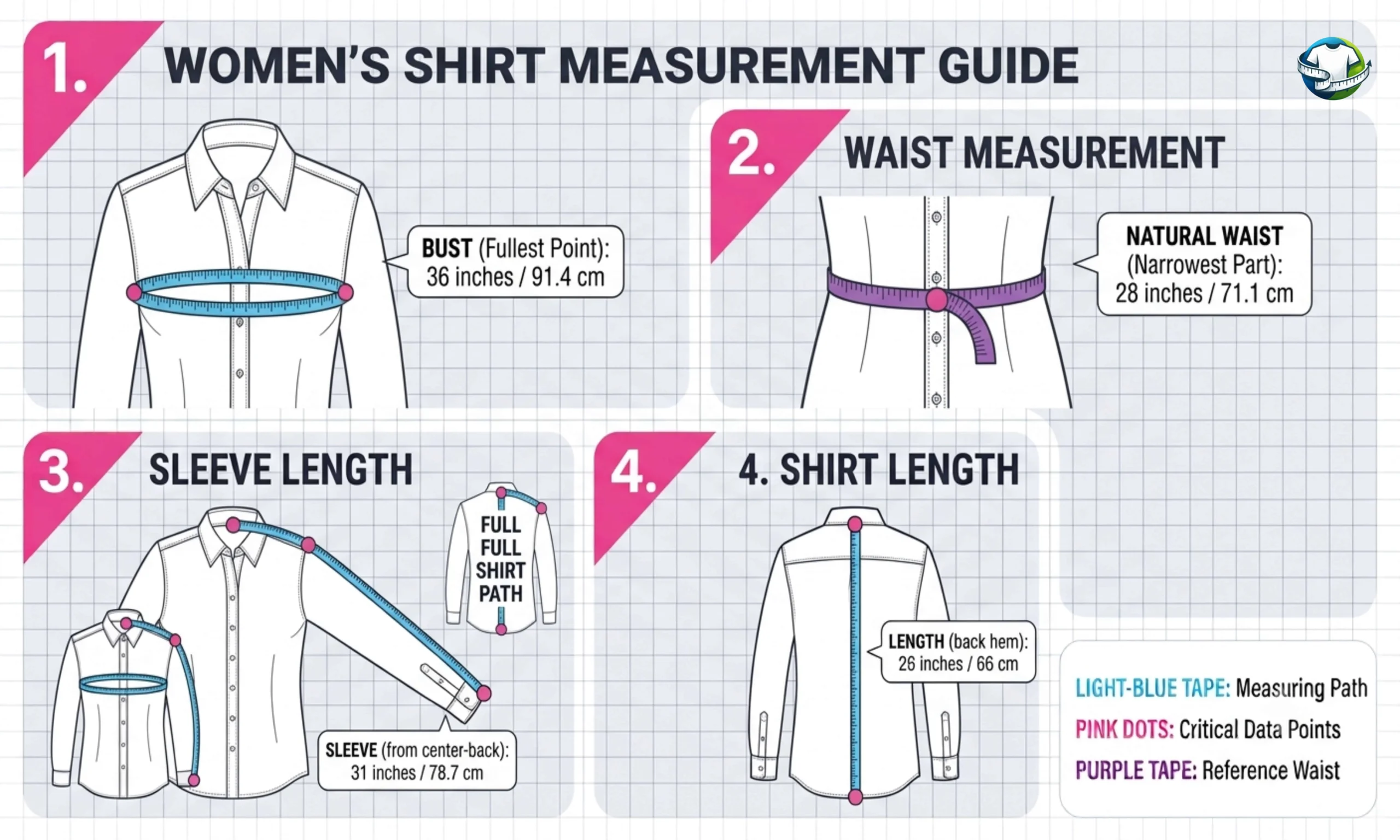
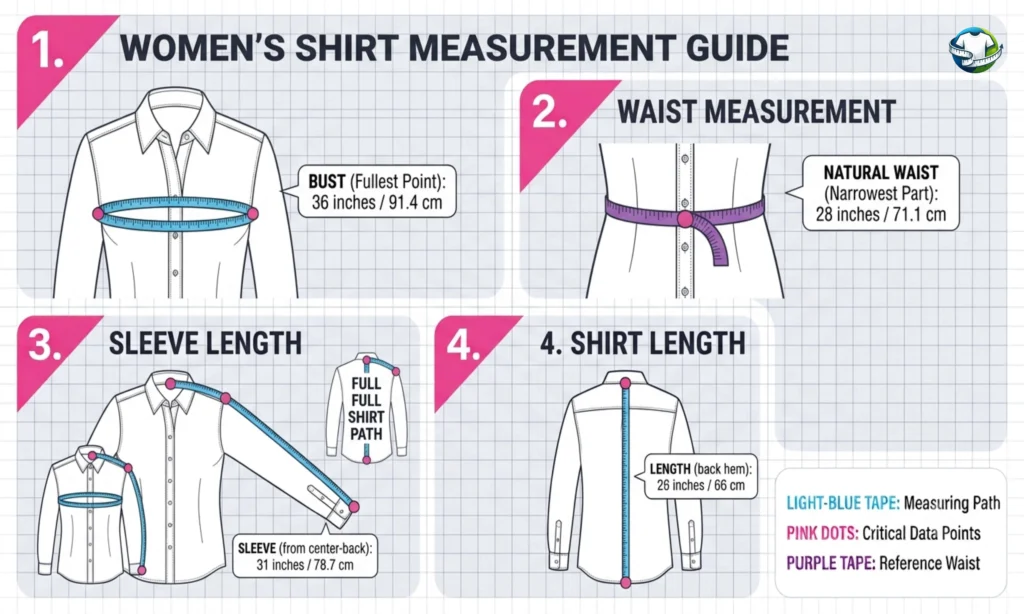
This part takes maybe five minutes and it’s worth doing properly:
Bust: fullest part of the chest, tape level, snug but not squeezing
Waist: the narrowest point of your torso, usually just above the belly button
Hips: widest part, including your rear
Shoulders: seam to seam across the back
Sleeve length: shoulder to wrist, if you’re buying anything long-sleeved
Write these down somewhere you won’t lose them. Next time you’re comparing yourself to a t shirt size chart for female shoppers, you’ll already have what you need instead of measuring from scratch every single time you want to buy something.
What a Typical Chart Looks Like?
Most retailers land somewhere close to this, give or take an inch:
XS runs about 31-32″ bust, 24-25″ waist, 34-35″ hips. Small is 33-34″ bust, 26-27″ waist, 36-37″ hips. Medium sits around 35-36″ bust, 28-29″ waist, 38-39″ hips. Large jumps to 37-39″ bust, 30-32″ waist, 40-42″ hips. XL is 40-42″ bust, 33-35″ waist, 43-45″ hips, and XXL runs 43-45″ bust, 36-38″ waist, 46-48″ hips.
That’s a rough t-shirt size chart for female buyers, but treat it as a starting point, not gospel. The female shirt size chart on the actual product page is going to be more accurate than anything general you find with a Google search, so always check that first if it’s available. This holds for plus size t shirts too – once you’re past XXL, the jump between sizes tends to get bigger from brand to brand, so leaning on a general chart alone is riskier than it is for standard sizing.
Plus Size Shopping Is Its Own Thing
If you wear plus sizes, you already know the labeling gets inconsistent fast. A women’s t shirt plus size might be marked 1X, 2X, 3X, or it might just be a number like 16 or 18. Neither system is better or worse, but they don’t translate cleanly between brands, so a 1X somewhere isn’t guaranteed to match a 1X elsewhere.
Look for stores that actually publish real ladies plus size tops measurements instead of just throwing a size letter on the listing and hoping for the best. The better retailers list bust, waist, hip, and even the garment length, which tells you a lot more than a size label ever could. That goes for plus size tops for women generally, not just tees – a listing with real measurements beats a size letter every time.
Shopping for plus size shirts and plus size t shirts for ladies works the same way, honestly – the fabric and cut still matter more than the label. A relaxed plus size t shirt in a stretch cotton blend is going to sit completely differently than a structured version in stiff fabric, even in the exact same marked size.
Denim is trickier because it doesn’t give the way a soft tee does. A women’s denim shirt plus size is worth double-checking against the chart before buying, and pay attention to whether it’s described as tailored or relaxed. A lot of brands sell both cuts in the same size range now, so read the product description, not just the size chart.
Blouses and Other Tops Aren’t the Same as Tees
T-shirts are simple. Blouses, tunics, and structured tops are not. Their ladies top size guidelines account for darts, tailoring, and drape in ways a basic tee chart doesn’t bother with, so a size medium tunic and a size medium fitted blouse can fit like two different garments entirely. The same goes double for plus size blouses, where darts and tailoring have even more room to throw off the fit if you’re going off the size label alone.
A proper ladies tops size chart usually includes garment length and armhole depth on top of the standard bust and waist numbers. Armhole fit especially gets overlooked, but it matters – an armhole that’s even an inch too tight will make a top uncomfortable no matter how well the bust measurement lines up.
Mistakes People Keep Making
A few habits worth breaking:
Trusting measurements from a year or two ago. Bodies shift over time, so it’s worth remeasuring occasionally instead of assuming nothing’s changed.
Ignoring what the shirt is actually made of. Stretch fabric and rigid fabric behave nothing alike, even under an identical size tag.
Skipping the specific brand’s chart because you already “know your size.” That size might not mean the same thing at this particular store.
Assuming plus size numbers are consistent everywhere. They’re really not, so it’s worth the extra thirty seconds to check.
A Few Habits That Actually Help
Keep a note on your phone with your current measurements so you’re never starting from zero.
Skim a couple of reviews before buying – people are usually pretty honest about whether something runs small or large.
Check the fabric content. Anything with spandex or elastane in it is going to be more forgiving than pure cotton.
If you’re stuck between two sizes, think about how you actually want it to fit rather than defaulting to the smaller size out of habit. Some of us like things fitted, some like them roomy, and that’s a personal call, not a sizing rule.
For layering pieces like a denim shirt, size up slightly through the shoulders if you’re planning to wear it over something else.
FAQ’s
Conclusion
None of this requires overthinking once you’ve got your own measurements written down somewhere. Compare them to the brand’s actual chart, factor in the fabric, and you’ll get it right far more often than not – whether that’s a plain tee, a tailored blouse, or a plus size denim shirt. The first purchase from a new brand might take a little extra checking, but after that, you’ll already know roughly where you land, and the guesswork mostly goes away.