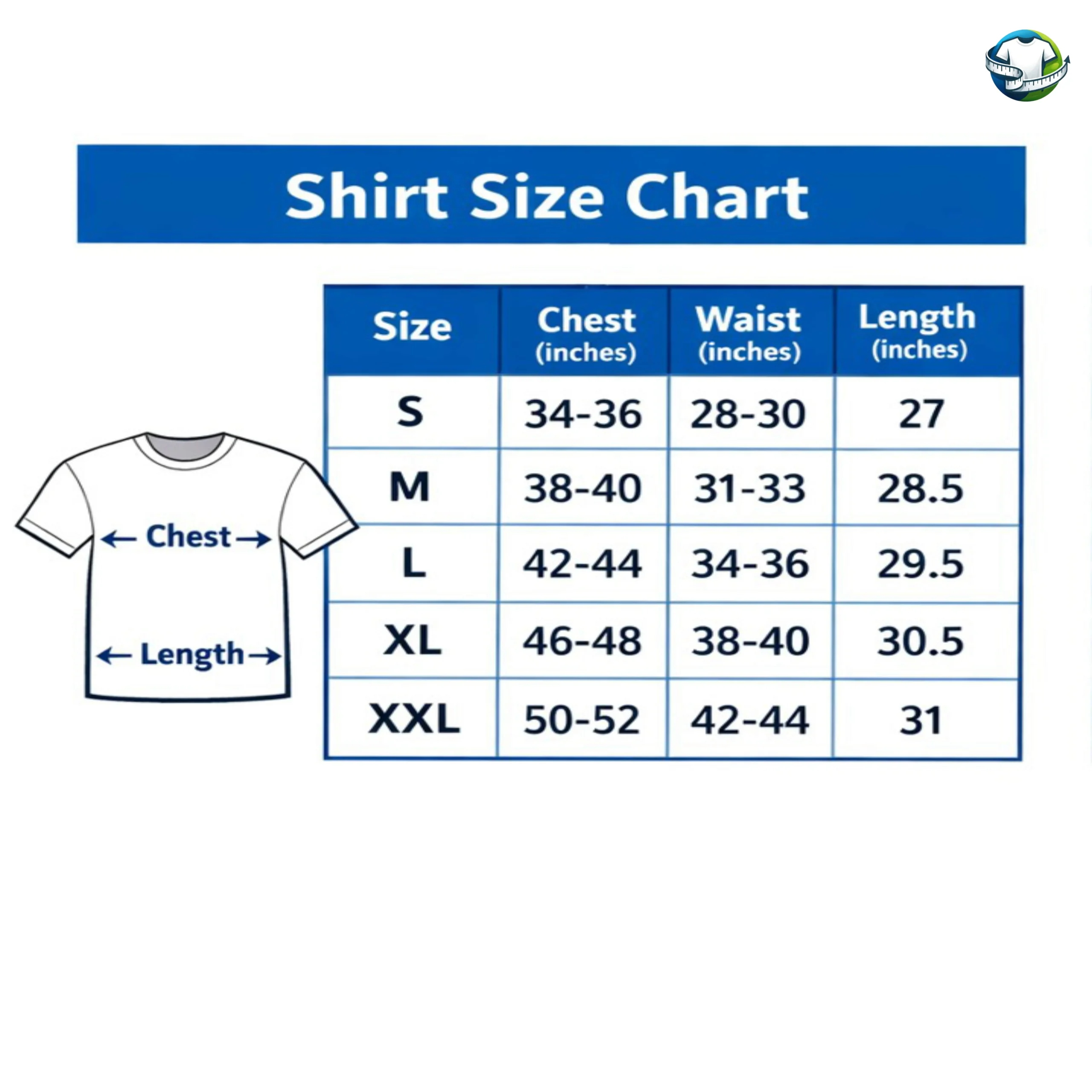
Shirt Size Chart
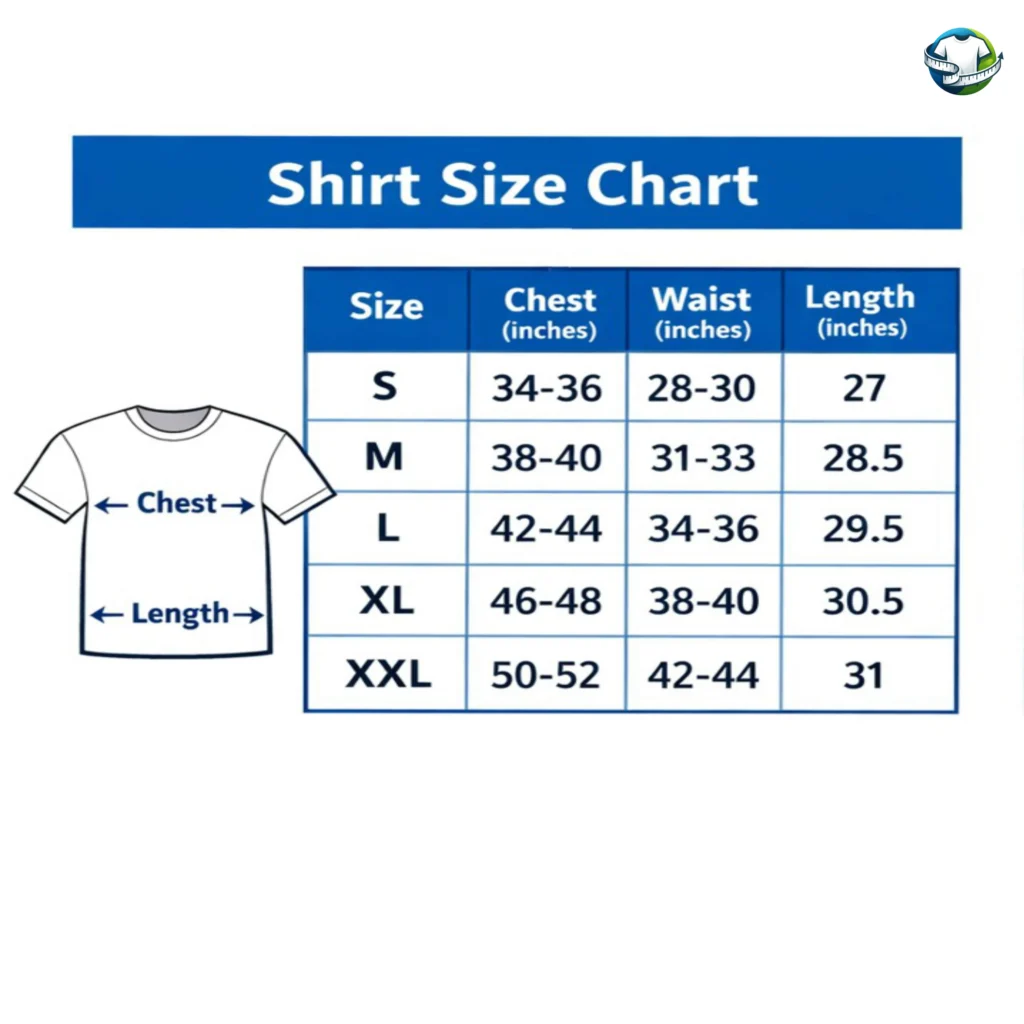
A shirt size chart plays an important role for choosing the perfect size of shirt. If you don’t know the exact measurements of shirt size you might get a shirt whose shoulders or sleeves are too long. The best way to get the right size is by men’s shirt size chart.
Let’s talk about the right shirt size for men by using a shirt size chart. It tells how to measure yourself properly, understand various international sizing standards, and make sense of youth shirt sizes as well. After reading, you’ll feel confident shopping for shirts anywhere and selecting the right fit every time.
Why Understanding Your Shirt Size Matters?
A shirt that fits perfectly is not only comfortable but also good for your looks and brings about your great self-esteem. A wide shirt can appear untidy, whereas a tight one can be limiting and ugly. Being sure of your right size men’s shirts guarantees that you are always sharp and well-groomed, regardless of your presence in a business meeting or a night out with friends.
If you’re shopping online, acknowledging a men’s shirt size guide reduces the chances of return. It makes your shopping experience smoother and more pleasant, as you can easily accumulate a closet full of Love-to-wear clothes.
How to Measure Men’s Shirt Size?
Before going to the shirt size chart for men we need to take exact body measurements. But, first you need a soft measuring tape. Stand relaxed and in a natural posture.
Measuring Your Neck
Start at the neck when sizing a dress shirt – it’s tricky to get right. Loop the tape around the bottom part of your neck, right where the collar rests normally. Keep it flat all the way around without tilting. Slide one finger under the tape so there’s just enough room, not snug. Round up to the closest half inch or full centimeter mark.
Measuring Your Chest
Start by standing tall, feet flat on the ground. Around the widest point of your chest, place the tape measure – it typically runs beneath the arms and straight across the back. Not too tight, not too loose, keep it comfortably firm against the skin. Level with the ground at every angle, that line must stay even. Most shirts rely heavily on this number for fit. Hold still while checking so nothing shifts.
Measuring Your Sleeve Length
When it comes to dress shirts and long-sleeved tops, the length of the sleeves is the most to consider. Take the tape measure and set one end at the base point on the back of your neck. Then move it across the top of your shoulder, down your arm to slightly past your wrist bone. Your elbow should be bent a little for this measurement to be accurate. Hence, the sleeves will not become short when you are moving your arms about.
Measuring Your Waist
Wrap the measuring tape around your waist just below your belly. Keep the tape level and comfortably loose. This measurement is helpful for finding shirts with a tapered or slim fit
Cracking the Code: The Shirt Size Chart for Men
Start by checking the brand’s size guide after noting your numbers. These guides usually show details like chest width, neck size, maybe even arm length. T-shirts tend to follow basic labels – small, medium, large. But button-up shirts? They lean on exact neck and sleeve figures instead.
Standard T-Shirt Men Size Chart
Casual shirts and t-shirts often follow a standard S-M-L sizing system. While there can be slight variations between brands, a typical size guide for men’s t-shirts might look like this:
| US Size | Neck (cm) | Chest (cm) | Shoulder (cm) | Sleeve Length (cm) |
| XS | 34–36 | 86–91 | 42–44 | 60-61 |
| S | 37–38 | 92–97 | 44–46 | 61-62 |
| M | 39–41 | 98–103 | 46–48 | 62-63 |
| L | 42–43 | 104–109 | 48–50 | 63-64 |
| XL | 44–46 | 110–117 | 50–52 | 64-65 |
| XXL | 47–48 | 118–125 | 52–54 | 65-66 |
| XXXL | 49–51 | 126–132 | 54–56 | 66-67 |
The XL shirt size, for example, is generally designed to fit a man with a chest measurement between 44 and 46 inches. Always check the specific t-shirt men size chart for the brand you’re buying, as some may run larger or smaller.
Dress Shirt Size Chart
The sluggishness of the collar decides how sharp a dress shirt looks, measured by a single digit like fifteen point five. That figure tracks the inch-based neck girth. Sleeve reach follows after, marked between thirty four and thirty five here. Length matters just as much as width when matching arms to cuffs.
A typical dress shirt size guide links those precise dimensions to broad labels like small, medium, or large. Yet matching clothes to your actual measurements usually results in something that fits more closely.
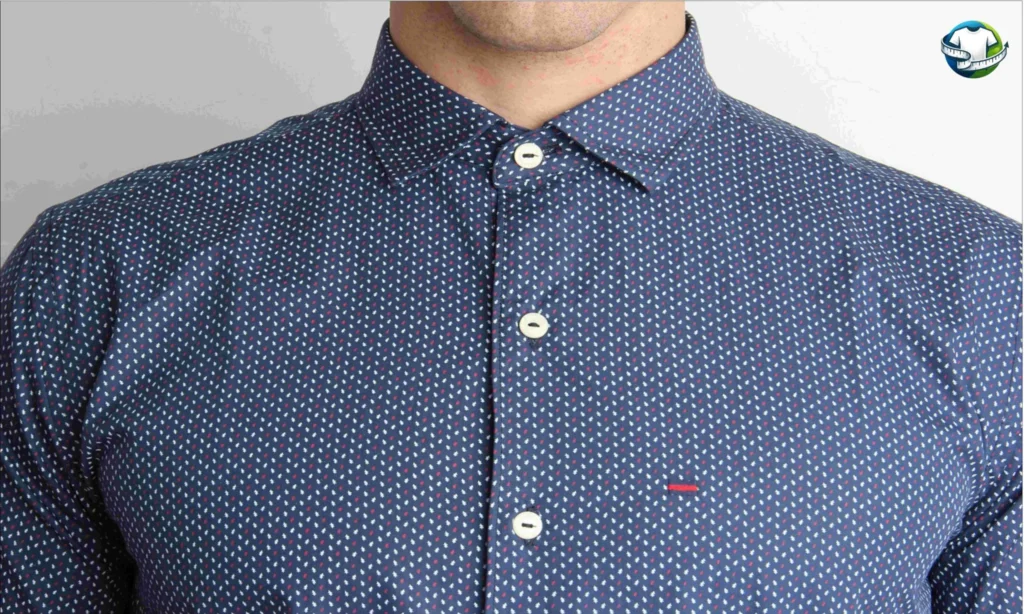
International Shirt Sizes
Shopping from international brands can be confusing due to different sizing standards. T shirt men size chart can vary in countries. A medium in the United States is not always a medium in Europe. Here’s a quick breakdown to help you convert between US, UK, and EU shirt sizes.
US Shirt Size and UK Shirt Size
The good news is that the US shirt size and UK shirt size are often identical for both casual and dress shirts. Both countries use inches for measurements, so a size “Medium” or a dress shirt size “16 / 34” will generally correspond to the same fit in both regions.
EU Shirt Size
European sizing is where things differ. The EU shirt size system uses centimeters for measurements. For dress shirts, a single number is often used which refers to the neck circumference in centimeters.
For men’s t-shirt sizes, the conversion is often numerical. For example, a US Medium might be a European size 48 or 50.
Always refer to the specific brand’s international conversion chart for the most accurate information.
Youth Shirt Sizes
A tricky thing? Picking the correct t-shirt size for a kid who keeps growing. Moving from kids’ clothes to grown-up styles happens through youth sizes. Age might guide you, yet actual body numbers give better results – growth never follows one pattern.
Youth Size by Age vs. Measurements
Starting with age might help, yet it doesn’t tell the full story. One kid at ten could be built totally different from another. Because of that, checking chest width makes more sense when reading a youth size chart.
A kid with a 29-inch chest matches well with a youth medium shirt. Should that measurement hit 31 inches, stepping up to a large makes sense – comfort matters, plus there’s space to grow. Most pre-teens fall into the youth medium range, which helps explain why it sells so often.
Most kids shift to adult clothing once they exceed youth XL. That often means beginning with a small in the grown-up range. Moving up in size feels natural at that point.
Tips for the Perfect Shirt Fit
Apart from the chart numbers a few things can ensure your shirt size.
Shoulders: The shoulder seam of the shirt should sit right at the edge of your shoulder bone. If it hangs over, the shirt is too big. If it’s moving up towards your neck, it’s too small.
Button It Up: You should be able to button a shirt all the way up without it pulling or gaping at the chest. For a dress shirt, you should be able to easily fit two fingers between the collar and your neck.
Mind the Torso: A well-fitting shirt should lightly skim your torso without being tight or baggy. There should be enough room for comfortable movement.
Sleeve Fit: The sleeve should be snug enough that it doesn’t billow but loose enough for you to bend your arm easily. When buttoned, the cuff should end right at your wrist bone.
FAQ’s
Conclusion
Shirt Size Chart has made shopping so easy you just have to measure your body measurements and match them with your region’s shirt size. For Example if your chest, length and sleeves are 26.5, 29.30 and 23.50 inches then you fall in the large size category. Just one thing to remember is that some brands have different shirt sizes than the standard sizes. So, if you are going to buy a shirt online you should check their specific size chart.